Prev
None
The conference was hosted by the International Red Light Ophthalmic Society (IRLOS) and organized by the Hong Kong Polytechnic University Wuhan Research Institute of Science and Technology Innovation. As the society’s inaugural official training, it assembled an elite lineup of leading academic forces in global myopia control.
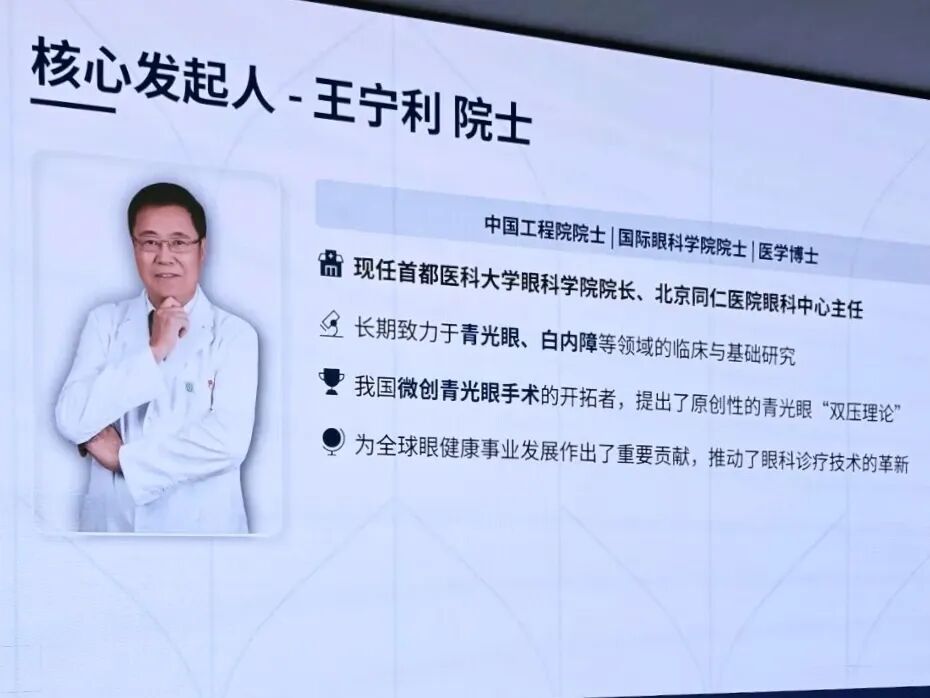
Core initiators included Academician Wang Ningli, President of the School of Ophthalmology, Capital Medical University; Professor Zeng Junwen, Director of Zhongshan Ophthalmic Center, Sun Yat-sen University; Professor He Mingguang, Distinguished Chair Professor of the Global Science Professorship Scheme, The Hong Kong Polytechnic University; Professor Jason Yam, Department of Ophthalmology and Visual Sciences, The Chinese University of Hong Kong; and Professor Kyoko Ohno-Matsui, Founding President of the Japanese Myopia Society. Many of these experts attended in person, joining hundreds of ophthalmologists and optometrists from across China with clinical experience in red light therapy to discuss cutting-edge technologies and clinical standards for red light myopia control.
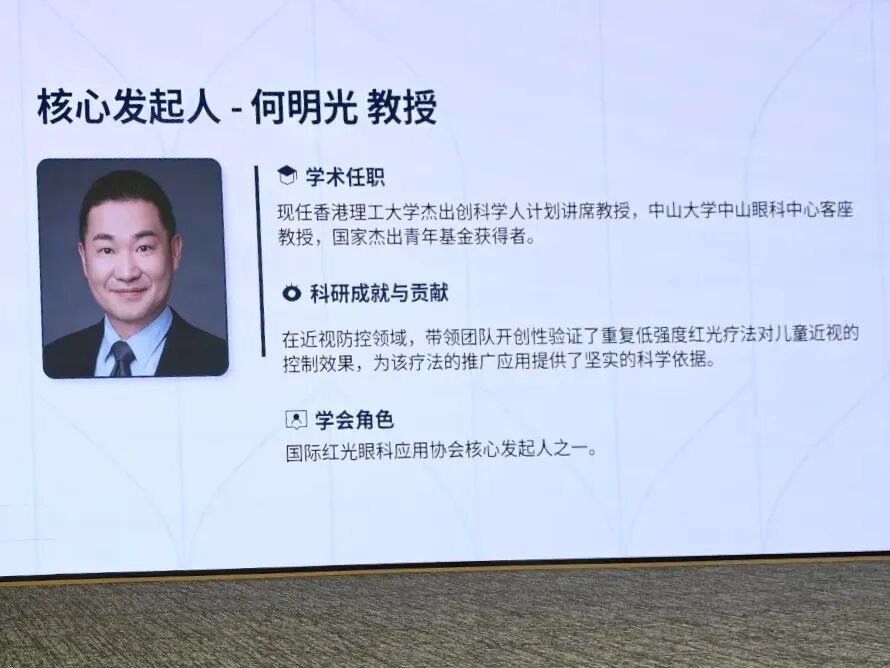
At the conference, Professor He Mingguang delivered a keynote report titled International Application of Red Light for Myopia Control: Latest Evidence on Efficacy and Safety, systematically elaborating the scientific principles and global research progress of Repeated Low-Level Red Light (RLRL) therapy.
The training thoroughly explained the core mechanism of RLRL: 650 nm low-level red light uses photobiomodulation to improve choroidal perfusion, increase choroidal thickness, relieve scleral hypoxia, restore collagen fiber elasticity, and ultimately slow or even control pathological axial elongation. Supported by multiple authoritative clinical studies, RLRL differs fundamentally from conventional thermal retinal treatment – it does not “heat” the fundus but provides “aerobic exercise” for the posterior segment of the eye.
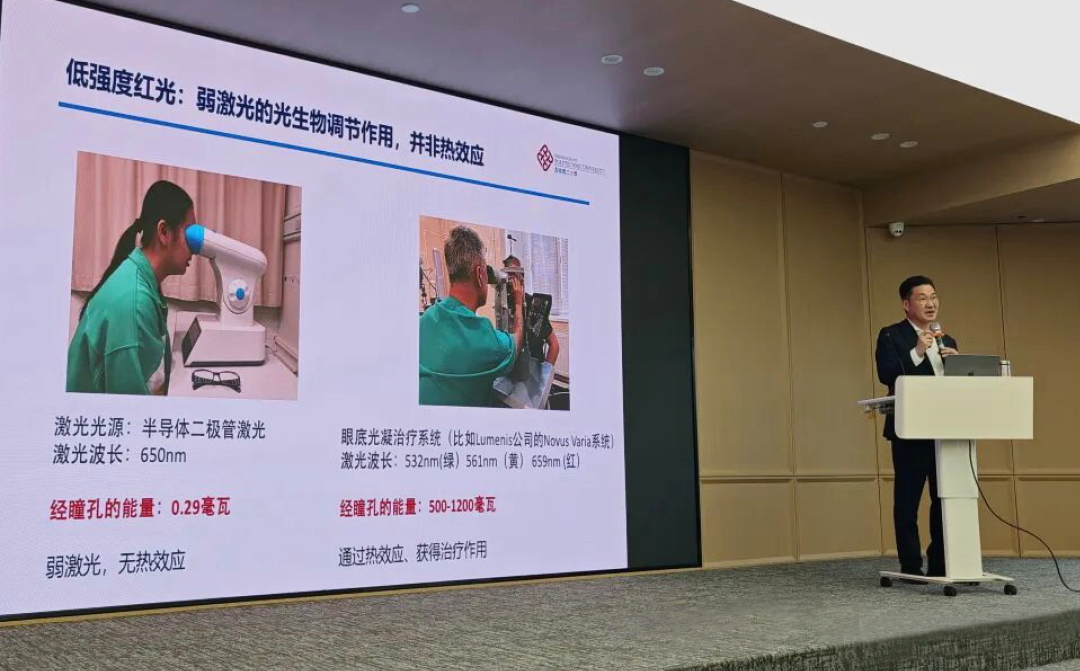
Professor He further clarified that RLRL uses a 650 nm semiconductor diode laser with a trans-pupillary energy of only 0.29 mW, classified as a low-power, non-thermal laser. This is in sharp contrast to conventional retinal photocoagulation (trans-pupillary energy 500–1200 mW, acting via thermal effects).
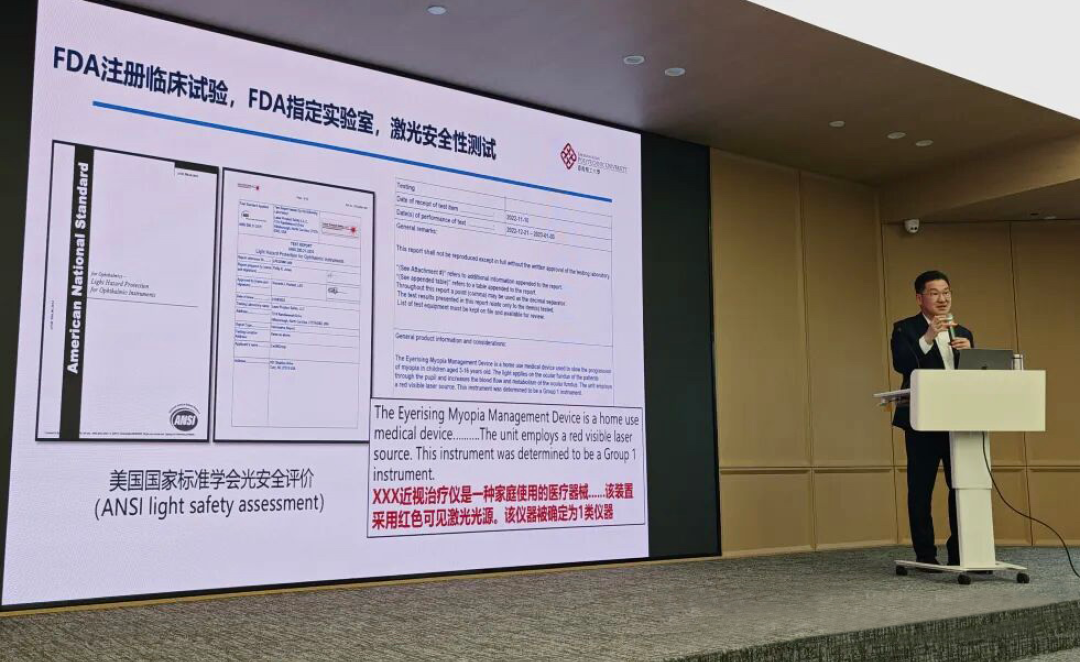
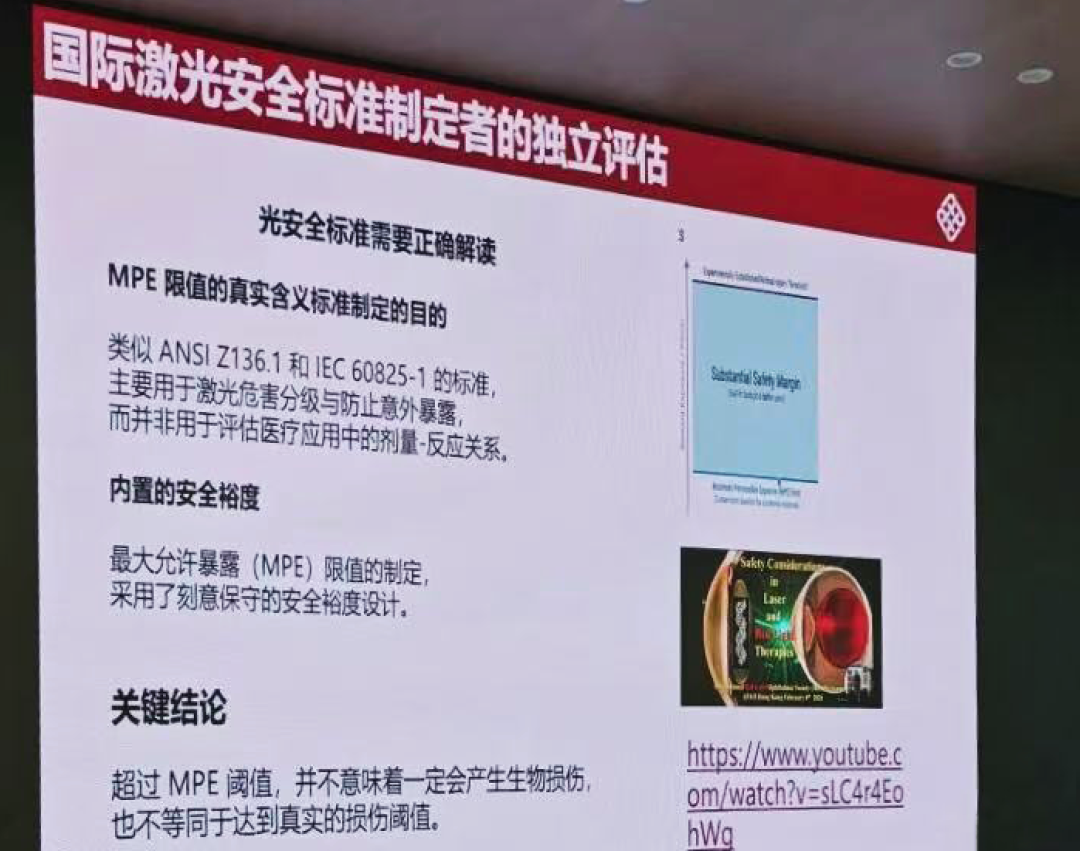
Regarding safety, Professor He shared globally validated findings: Independent laser safety testing by the American National Standards Institute (ANSI) showed that RLRL’s retinal photochemical hazard, anterior segment radiation, and retinal thermal hazard are far below international safety limits. The device is designated a Class 1 laser instrument, meeting safety standards for FDA-registered clinical trials.
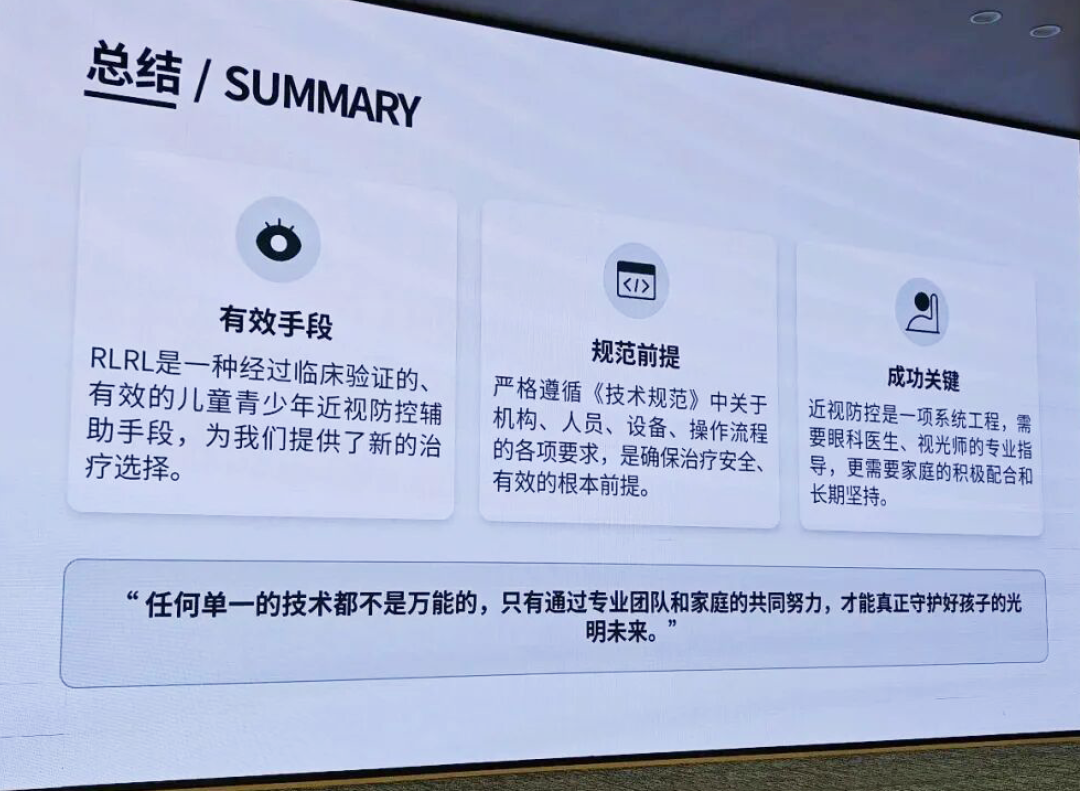
Instructor Mr. Ly Yonghui also interpreted the Technical Specification for Adjuvant Treatment of Myopia in Children and Adolescents with Repeated Low-Level Red Light Irradiation clause by clause, clarifying institutional qualifications, personnel requirements, device standards, and operational procedures to ensure full implementability.
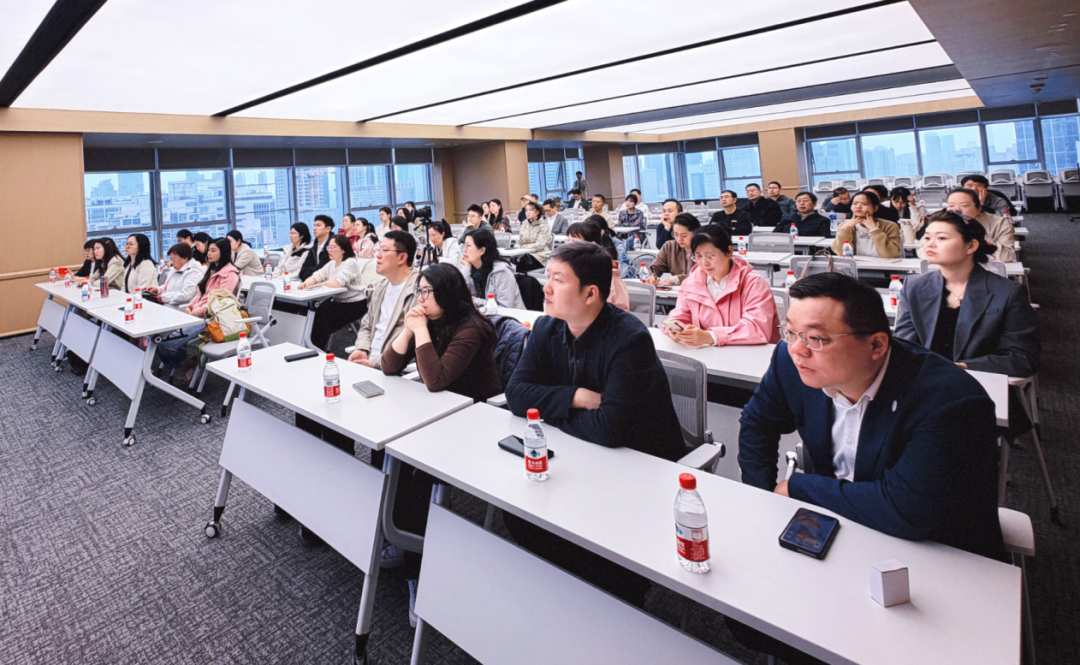
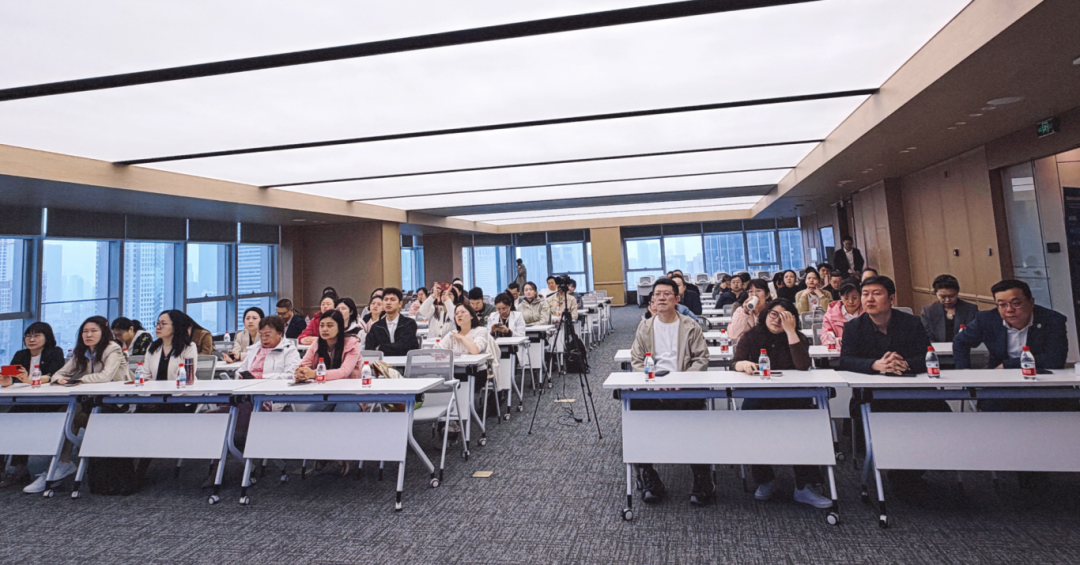
The training was highly practical and well-received. The final Q&A session drew enthusiastic participation, with clinicians raising daily practical questions and complex cases for in-depth discussion with the expert panel. The nearly two-hour exchange remained vibrant until the closing; many attendees stayed afterward to continue sharing insights and experiences.
As the world’s first international academic organization dedicated to ophthalmic red light applications, International Red Light Ophthalmic Society (IRLOS) is committed to advancing the standardization, normalization, and globalization of red light therapy. Through rigorous lectures, case sharing, and technical assessment, this training cultivated the first cohort of professionals proficient in standardized red light diagnosis and treatment, setting a critical standard for the red light myopia control field and translating cutting-edge research into accessible medical care.
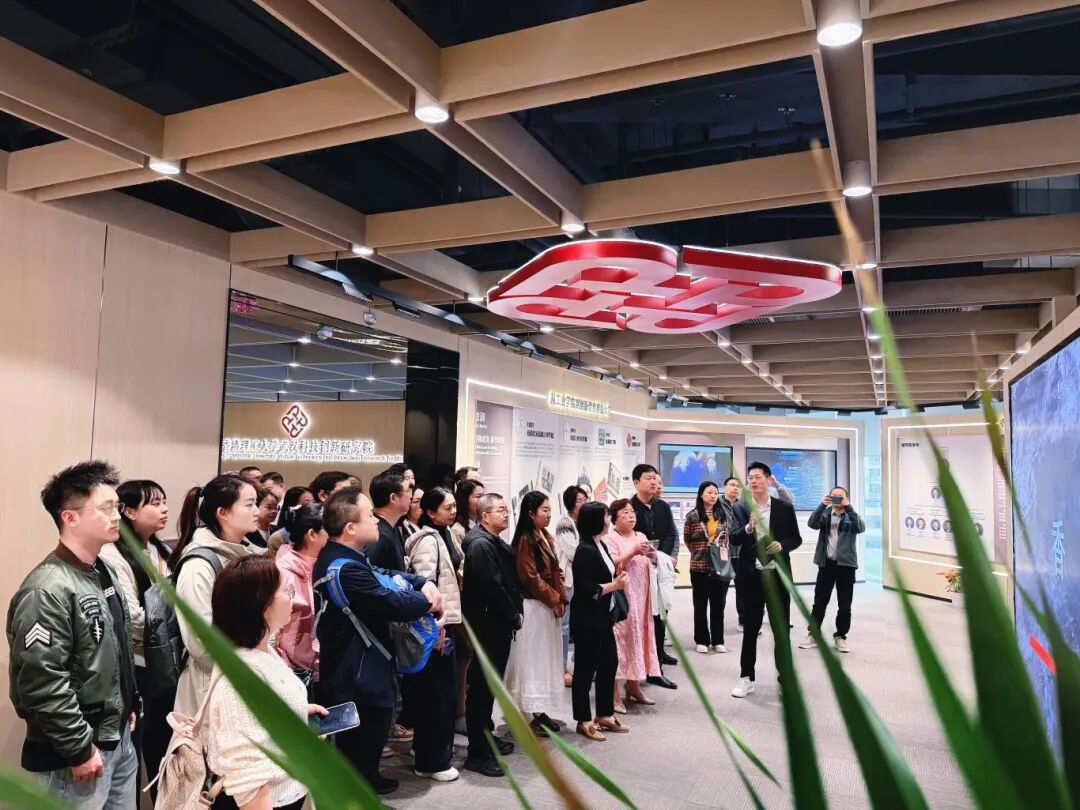
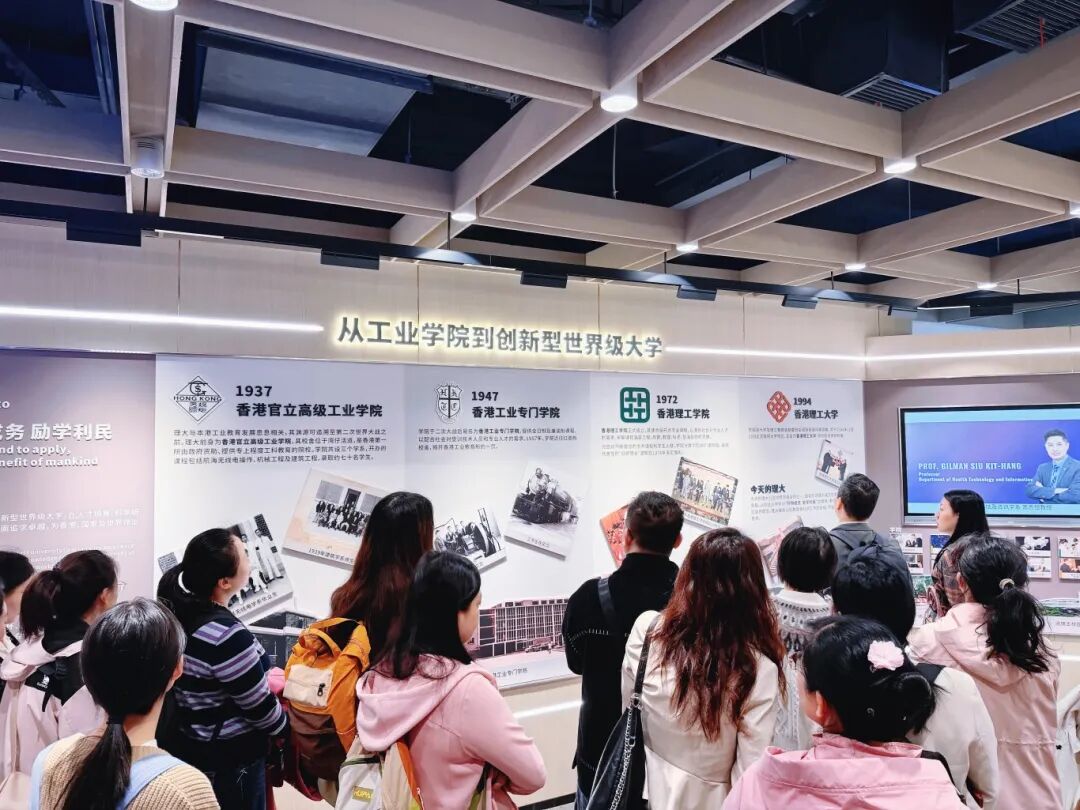
During the conference, all participants visited the exhibition hall of the Hong Kong Polytechnic University Wuhan Research Institute of Science and Technology Innovation. They learned about PolyU’s nearly 90-year history and research achievements, experiencing its core philosophy of “innovation anchored in industry” and industry-university-research translation in ophthalmic healthcare. As the organizer, the institute served as a bridge connecting Hong Kong and mainland China, linking research and industry, providing a world-class academic platform and supporting the localization of global ophthalmic innovations in Wuhan.
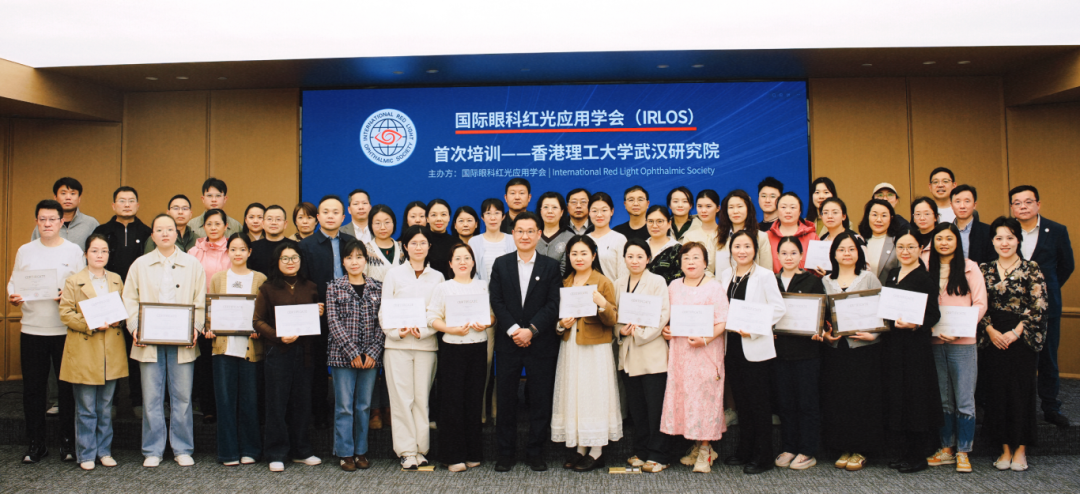
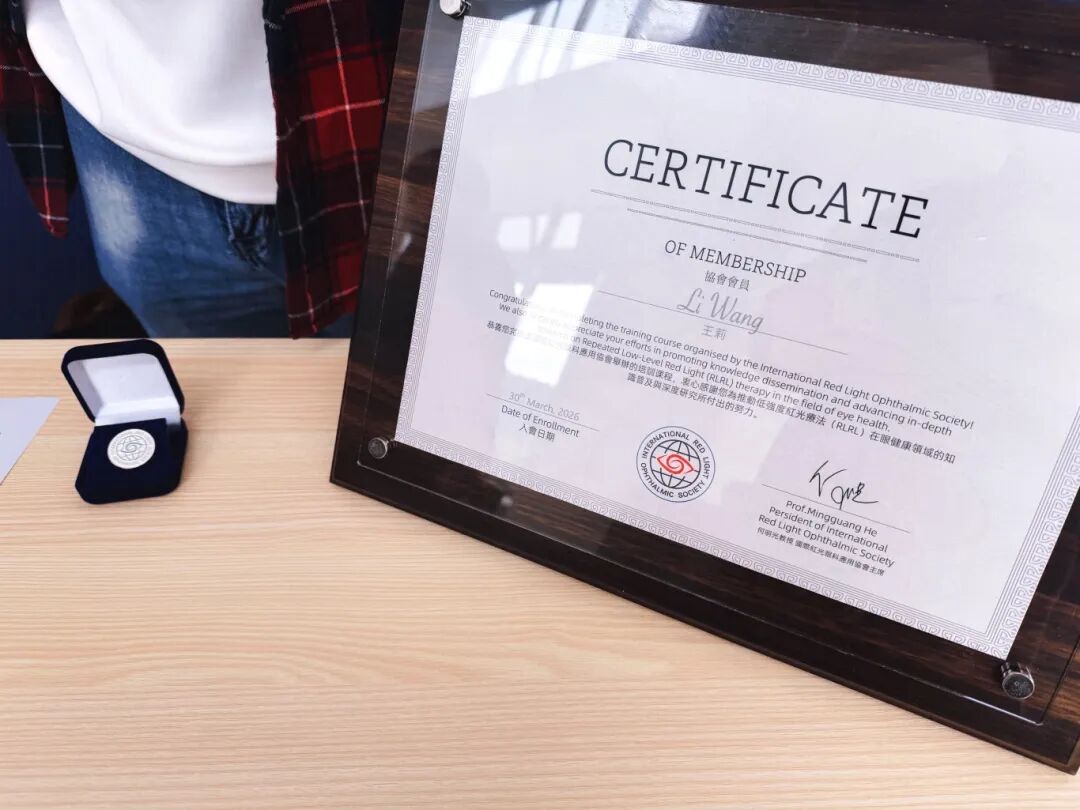
At the closing, all experts and trainees took a group photo. Trainees who passed the assessment officially became IRLOS members, receiving membership certificates and exclusive badges awarded by Professor He Mingguang, Dean of the Wuhan Research Institute. This marked the formation of China’s first professional team in standardized red light diagnosis and treatment.