

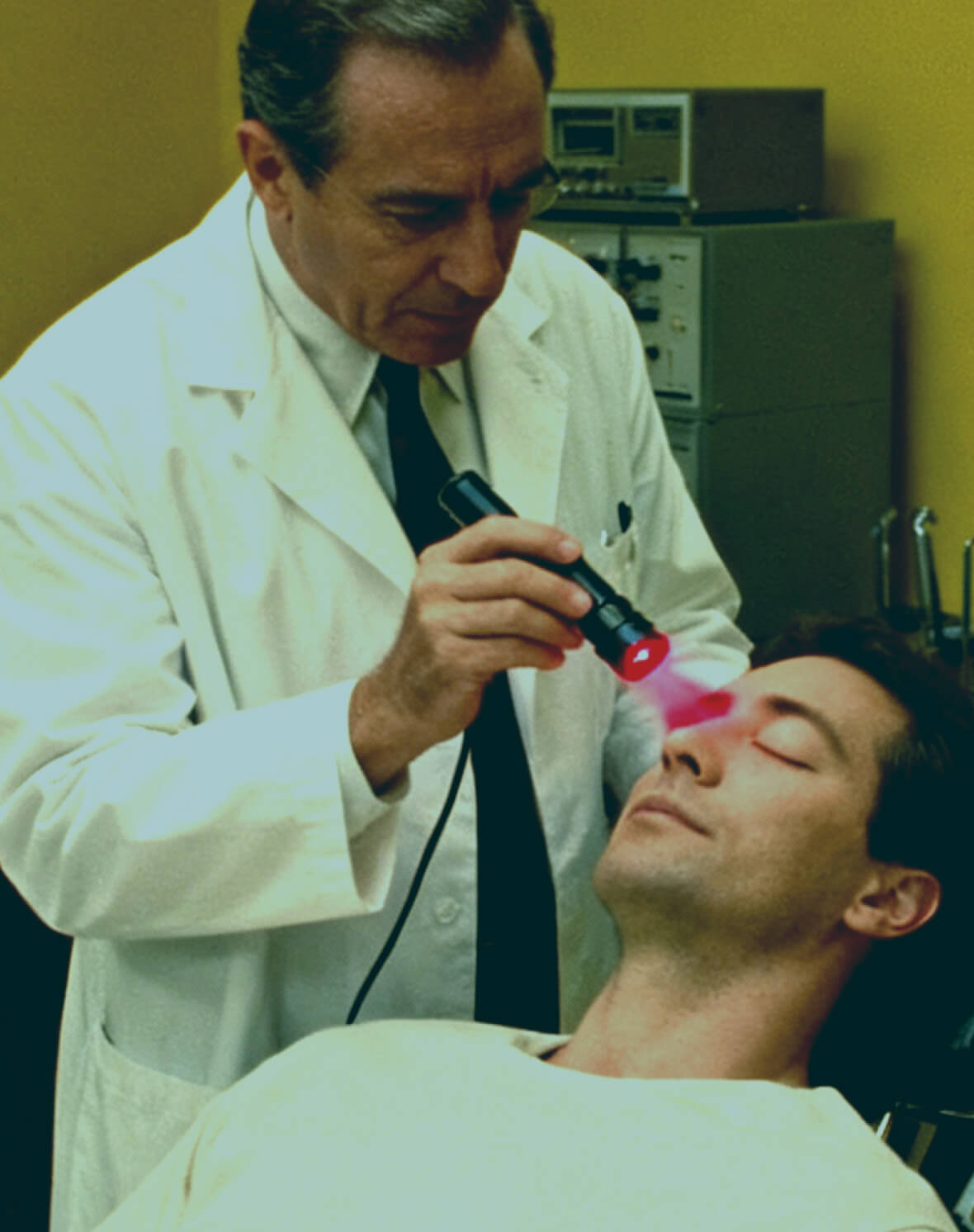
The idea of healing with light has been around for over a century, but using red light for eye health began in early of mid-20th century. In 1967, Hungarian physician Dr. Endre Mester accidentally discovered the therapeutic potential of low-power red lasers . While attempting to shrink tumors in mice with a ruby laser (694 nm), he found that a weak red laser stimulated hair regrowth and wound healing instead of harming tissue .
This serendipitous finding – originally called “laser biostimulation” – launched the concept of low-level light therapy (later known as photobiomodulation). By the 1970s, red light therapy was being explored as a physical therapy modality in some of Eastern European and Asian countries, used to relieve pain and enhance healing of injuries .
Ophthalmology took notice of light therapy earlier. In the late 1960s and 1970s, eye doctors experimented with red light for treating amblyopia (lazy eye) in children. For example, clinicians used red filters or lights over the stronger eye to stimulate the weaker eye. In India, Dr. S. R. Malik and colleagues reported that using a red filter as part of amblyopia therapy not only improved visual acuity but also unexpectedly slowed the growth (axial length) of the eye .
Around the same time in China, practitioners were also using red light in amblyopic children and began observing a similar effect – children exposed to red light therapy had slower progression of nearsightedness . These early uses in eye care hinted that red light could influence eye development and health, although the approach remained unconventional for many years.